

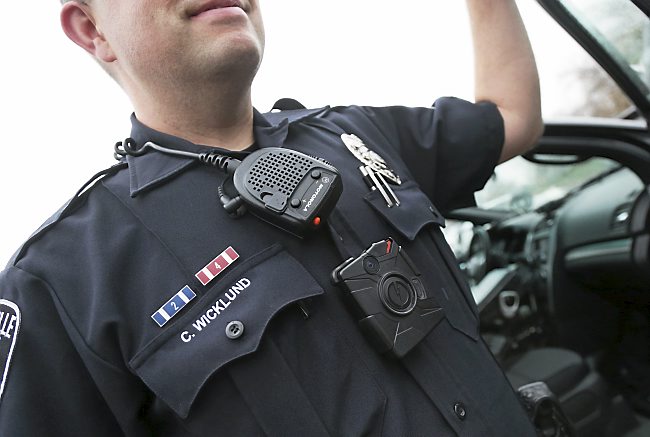
Minnesota police departments lost their bid Monday to classify most body-camera footage as private.
The commissioner for the Department of Administration rejected a request to temporarily wall off the data until state lawmakers pass body-camera regulations. A coalition of police departments had sought the data lockdown to avoid having to release footage they say could infringe on privacy of people officers interact with.
In a letter outlining his decision, Commissioner Matt Massman said it’s outside of his authority to classify the information as private because current laws say the footage is public in the same way as written arrest data and police reports. Massman urged the police chiefs to approach the Legislature about clarifying data laws.
“Minnesota’s data practices laws are designed to be neutral to technology,” Massman wrote. “The reality is, however, that body cams have the potential to collect substantial amounts of video and audio in private and very sensitive circumstances.”
Transparency watchdogs contend that making footage private would lessen the accountability aspect of body cameras.
Maplewood Police Chief Paul Schnell, who spearheaded the request, said the police departments knew the request was a longshot.
“We had hoped we could have moved forward,” Schnell told the Associated Press on Monday. Now, the group will focus on working out a legislative solution, “which we knew all along was our ultimate goal,” Schnell said.
Eighteen police departments had banded together to make the request, including some that don’t even use the cameras yet. Some indicated in letters accompanying their application that they were hesitant to use the cameras until the data guidelines were clearer.
The applicants argued that limitations are justified because police encounters with the public can be highly emotional or in bathrooms, bedrooms or hospitals.
Existing law makes some data off-limits if, for example, footage is part of a sensitive investigation or could expose children who are suspected abuse victims.