

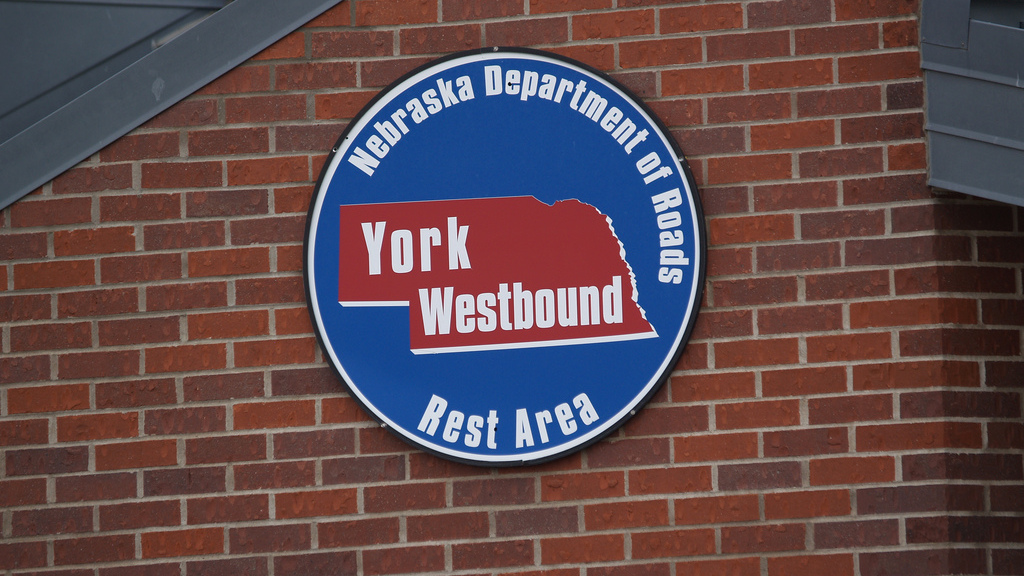

(MINNEAPOLIS) – The sign has alerted you and you take the off ramp and coast into a parking spot. Time to stretch, go to the bathroom, get a drink, maybe sit at a picnic table and have something to eat. It’s free, it’s open to everyone to use as they like. It’s the American roadside rest stop and it is pure socialism.
America’s network of roadside rest stops is a largely unremarked success. They let tired drivers rest, and cooped up dogs and children can get a chance to run off some excess energy. Before we became quite so paranoid as a society, people would camp overnight there for free. For anyone with a little Jack Kerouac or James Dean in their soul, that was one of life’s simple pleasures: listening to the whine of tires on asphalt or the more distant sounds of farm machinery, watching the sun slowly set over the countryside while contemplating the role of being on the road in America.
Rest stops are supremely democratic. Everyone uses them on an equal basis regardless of if they got there in a Mercedes, a VW bug or a semi-trailer. There is no entrance fee, no VIP area, no reserved seating. They are self-policing, and run off the assumption that we can trust each other; that cooperation will work because we all know how to behave in public.
American socialism
Rest stops are socialist because they are supported by tax money collected from rich and poor alike but free to anyone. We don’t think of them as socialist, perhaps because in the United States, the word “socialism” is not a term of economic analysis but of abuse. We use it as in insult.
And, of course, the socialist paradise of the rest stop is under slow attack. First came “hosts”: individuals or couples who would be stationed there to provide protection and supervision. This was fairly benign as the hosts typically offered help to those who needed it. Then came vending machines – still not coercing anyone, but introducing, in a small way, a “commodification” of the rest stop experience. Now you can purchase a better experience if you have the resources. Again, this seems a fairly minor intrusion, but it still represents a breach. Where pop machines exist, the public drinking fountain is likely endangered.
Some rest stops were commercial from the beginning, stocked with a service station and a fast food restaurant and only a small public area where you might eat your own food.
The market
How long will it be till the great modern god of “the market” insists on freeing our roadside rests from the shackles of government tyranny? Can we look forward to paying an entrance fee but perhaps with the option to purchase an annual pass or get our frequent rest stop card punched for discounts? Will there be a VIP area with better picnic tables whose residents look down on the failures who can only afford the cheap areas? Or will the vendor of food prohibit us from bringing our own in? Will we be offered the chance to purchase t-shirts and mugs and hats for our favorite rest stop? Can we look forward to commercials urging us to patronize the stops of one company over another?
It is quite likely that such a privately-run rest stop might well have plusher accommodations, nicer bathrooms and a better class of picnic tables. And those annoyed by a splinter or a cracked toilet seat or the absence of quality wi-fi might well vote to sell off a rest stop to a commercial company.
An improvement?
But would a privatized rest stop really be better? The current public, free, system is a statement of faith both in your fellow travelers and faith in all your fellow citizens. We trust that the people who used it ahead of you didn’t trash the place. We trust that those who need it will use it and that it will be there when we need it.
We have faith that we can all get along without anyone with power looking over our shoulder. The trucker and the professor can coexist with the cowboy. There’s no chance that someone, desperately in need of a break will be turned away because they can’t pay.
Rest stops are a testament that we really aren’t just in competition with each other. I can enjoy the view and it doesn’t take your view away. I can enjoy the sun and grass and it doesn’t reduce your enjoyment. There is more to our existence than a dog-eat-dog competition. In the environment of the rest stop, we’re more likely to help someone who has broken down or needs something.
Should rest stops go commercial, another piece of our public, self-governing culture will disappear. One more aspect of our existence will be redefined as a pure economic transaction in which there are rich and poor, winners and losers.
The marketplace, real and symbolic, is not the only forum, nor the only way, to describe our lives. We also travel life’s highway together and on that journey we need rest, we sometimes need help and our success does not require us to win over anyone else.