

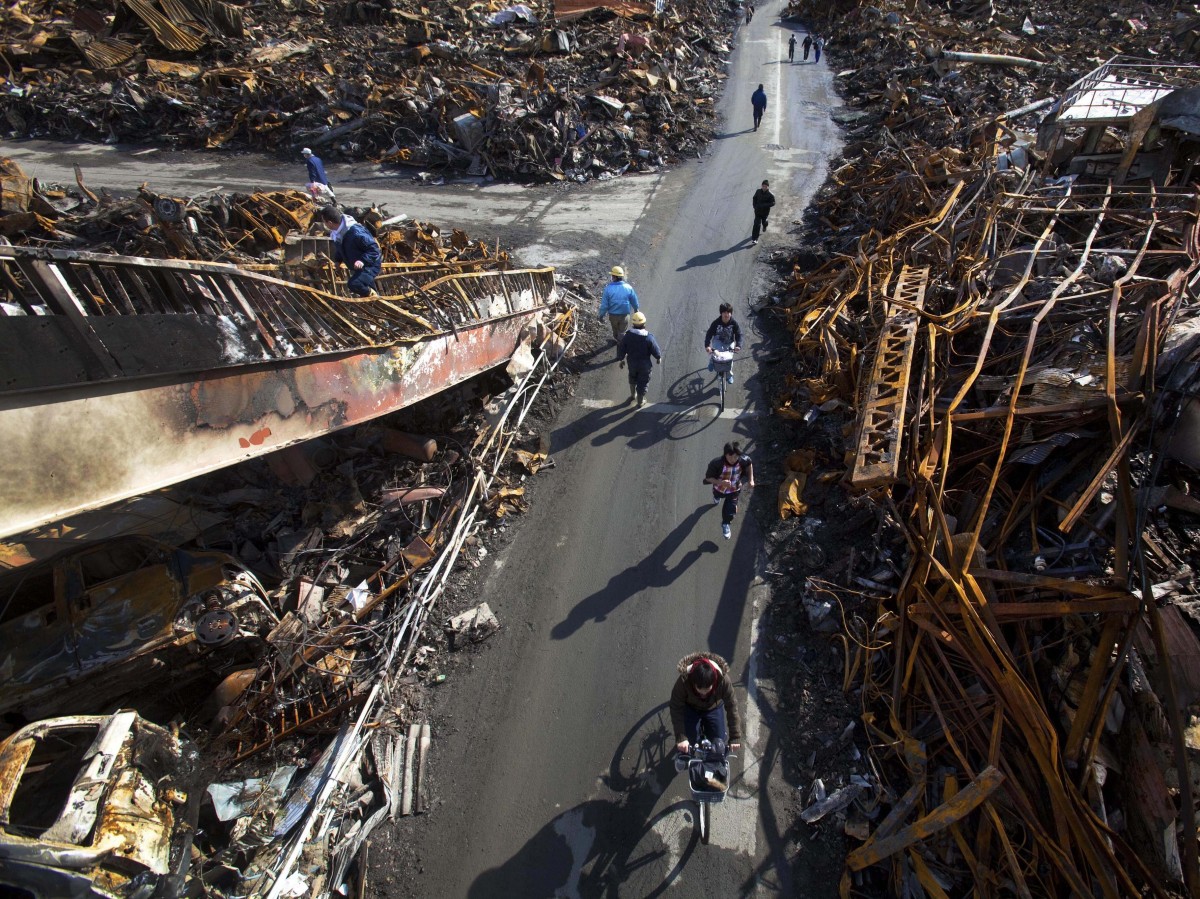

Money set aside to help victims of the March 2011 Japanese earthquake and tsunami, which killed almost 20,000 people and resulted in a meltdown at a nuclear power plant, has been spent on projects that have nothing to do with recovery efforts.
According to The Guardian, nearly $99 million that was intended to help survivors was instead spent on projects unrelated to the rebuilding of the tsunami-ravaged region. Projects included counting sea turtles, publishing a restaurant guide, and promoting wine and cheese.
As a result of the tragedy, more than 150,000 people were forced to leave their homes. Two years later, 300,000 people were still living in temporary homes as a result of the disasters. Many of those people have not been able to find jobs.
Money that was supposed to be used to hire people affected by the disaster was also found to be misused. A program designed to help disaster victims find employment missed the mark badly, with 97 percent of the jobs going to people not directly affected by the disaster, according to Japan’s Asahi Shimbun newspaper.
A top spokesman for the Japanese government, Yoshihide Suga, said claims of misuse of federal aid by the Asahi Shimbun newspaper were being investigated.
“After seeing the results, we will take firm measures with a view to stricter rules [on the use of funds],” he said.
As a result of the earthquake, its aftershocks, the tsunami and the explosions at the Fukushima Daiichi Nuclear Power Plant, about 80,000 people were relocated. It took a team of nuclear operators nine months to ensure the reactor was off, making this nuclear accident the worst since Chernobyl in 1986.
Officials waited to confirm that there was a meltdown at the plant, resulting in widespread radiation. As a result, between 1,000 and 4,000 square miles near the plant needed to be decontaminated, a process that involves clear-cutting forests and removing contaminated soil.
A year after the incident, many young people have said they do not want to move back to the area. “The whole town has to be decontaminated to a low level of radiation before anyone moves back,” Mr. Shiga said. “I doubt that will happen. It’s sad, but we can’t look back.”
“I don’t trust the government on anything related to health anymore,” said Masaaki Watanabe, 42, who fled the nearby town of Minami-Soma and doesn’t plan to return.
Senior citizens, on the other hand, say they have nothing to lose and will end up moving back since the health effects of the radiation are not likely to become apparent in their lifetimes.
Those who did not return to the area within a year were fired. Mr. Shiga’s wife, Emika, said she was fired after she didn’t return to her auto-part factory job. But she says people have been incredibly generous, with her family receiving 10 months of unemployment pay, two years’ worth of rent stipends and access to volunteer helpers.
But not everyone who was displaced by the tsunami and nuclear meltdown has been as lucky as the Shigas.
As of March 2013, Japan was still struggling to rebuild communities, and hundreds of the 300,000 displaced evacuees filed a lawsuit demanding compensation from the government and the power plant’s operator, Tokyo Electric Power Co.
“Two years after the disasters, neither the government nor TEPCO has clearly acknowledged their responsibility, nor have they provided sufficient support to cover the damages,” Izutaro Managi, a lawyer representing the plaintiffs, said.
The lawsuit, which was filed by 800 people in Fukushima, asks for an apology and payments of about $625 per month for each victim until the radiation is completely removed. Similar lawsuits are likely to be filed by residents of Tokyo and other cities.