


CAIRO, Egypt — Instead of calming the hostile confrontation between supporters of President Mohamed Morsi and the mass of protesters seeking his ouster, a military statement giving political forces just 48 hours to resolve the country’s current crisis appears to have hardened stances on both sides.
In a statement read on national television Monday, the military, once the guardian of Egypt’s transition to democracy, said it would intervene with a road map for the country’s future if leaders failed to listen to “the will of the people.”
From jubilant euphoria, to cautious welcome, anger and dismay, Egyptians displayed a wide range of reactions to the statement that highlights the political polarization feeding Egypt’s unrest since Morsi, a former Muslim Brotherhood leader, took office a year ago.
“We are fed up with the Muslim Brotherhood ruling us,” said Sawsan Farah, as she walked out of a café near Cairo’s Tahrir Square carrying an Egyptian flag.
“It was comforting when Sisi started by saying he was not here to rule again,” she said of Defense Minister Abdel Fattah al-Sisi’s statement. “That he has no interest in politics, and that he is only here to protect Egypt. “He will put us on the right track. I trust him, 95 percent.”
Bursting fireworks, chants and cheers, and a cadence of vuvuzela horns have filled Cairo’s Tahrir Square since the army announced it would be forced to intervene. Millions have taken to the streets across the country to demonstrate against Morsi’s presidency.
The military previously seized power in the wake of the uprising that toppled former President Hosni Mubarak in 2011, but quickly fell out of favor with activist circles as it cracked down on protests and sent thousands of civilians to military tribunals.
Morsi’s victory in the presidential elections last year was hailed as a triumph over decades of military rule, whether publicly or behind the scenes. But Morsi’s poor governing style and failure to head off the country’s economic turmoil have turned many Egyptians against the Islamist leader.
Others who went to the streets openly hoped for the military to take over.
“I want for the military to take control, at least for one or two years,” said Baher Zaki, the manager of a tourist agency.
Having been a supporter of the former regime, Zaki had never taken part in the demonstrations that ousted Mubarak or sought to pressure the military. But unhappy with the president and continued unrest, he signed a petition calling for Morsi’s removal and then took to the streets.
“They are the only ones who can restore Egypt and bring us stability again — that is what we want,” he said. “I love Egypt and I trust that the military loves Egypt more than anyone else.”
But while some welcomed an army intervention in the name of stability, others said they fear a return to military rule.
Not least were the supporters of Morsi, rallying across town at the Rabeaa al-Adwea Square.
For them, overthrowing the country’s first democratically elected president is nothing less than a coup that defies the will of the people and invalidates the leader’s electoral legitimacy.
Speaking Monday to members of a pro-Morsi crowd, some of whom were armed with sticks, clubs and helmets for fear of possible attacks, senior Brotherhood leader Mohamed Beltagy said a coup would take place only “over our dead bodies.”
“If anyone wants to remove Morsi, they have to go the right way — through elections,” said 23-year-old Mahmoud Abd El Reheem at the pro-Morsi rally.
“We have come a long way in two years,” he said. “And I’m afraid that we are going back that the military regime is going to come back.”
For the die-hard revolutionaries who not only fought for Mubarak’s fall, but also battled for the military to leave power, the prospect of the generals’ return to the helm is painful.
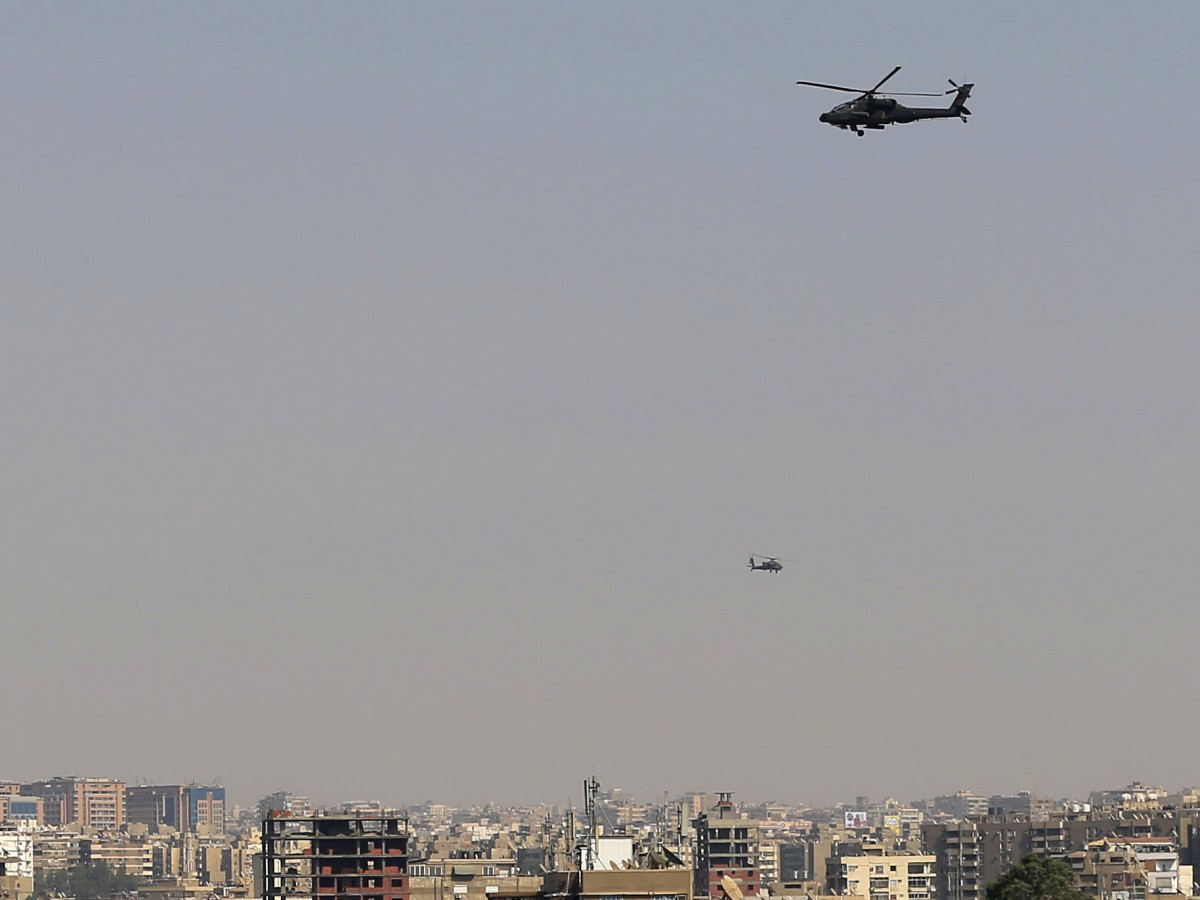
“The people are shouting for the military to return, helicopters fly over and it makes them happy, and it is absolutely crazy,” said Ramy Essam, a revolutionary singer who rose to fame when he turned protest chants into songs during the uprising in 2011.
The army detained him in March 2011 and tortured him for hours after clearing a sit-in in Tahrir Square.
“I stopped singing… because I was angry,” Essam said of the past couple of days. He says he does not trust military assurances that they don’t seek a return to politics.
“They always want to control and rule the country from behind, so I don’t trust them at all.”
This article originally was published at Global Post.