

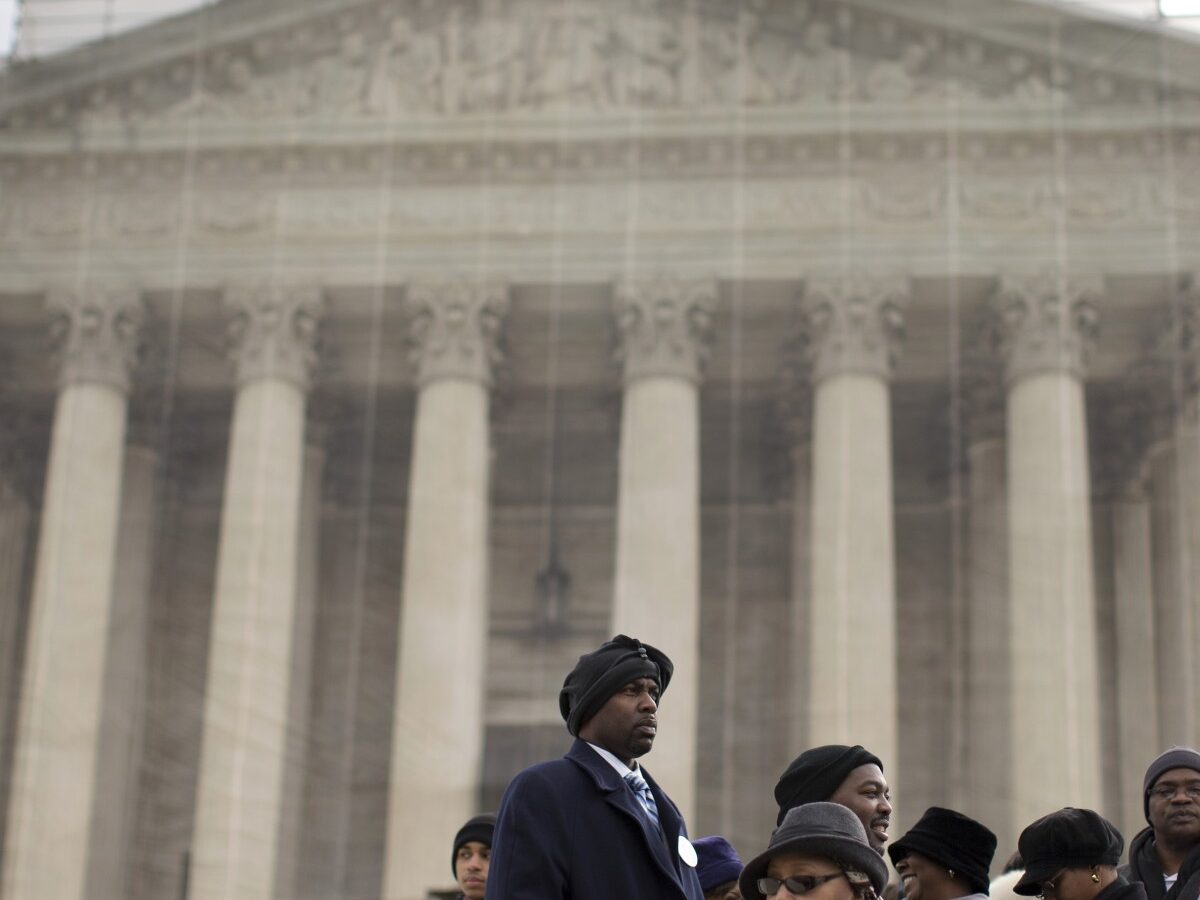
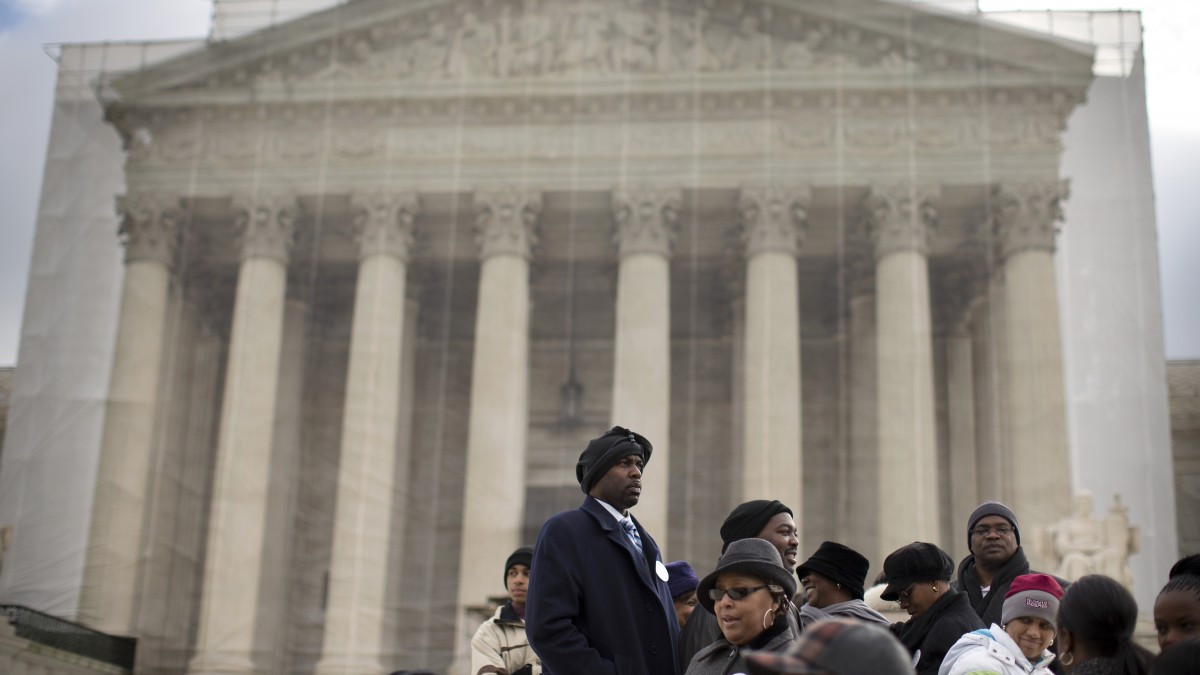
A bipartisan group of congressmen formally introduced a response to the U.S. Supreme Court ruling in Shelby County v. Holder last Thursday. That ruling effectively freed a number of states and communities with a history of racial discrimination from first seeking the Department of Justice’s approval prior to changing their voting laws.
The legislators’ proposed new law — the Voting Rights Amendment Act — will specifically address Chief Justice John Roberts’ majority opinion that the formula established under section 4 of the Voting Rights Act, which allows Congress to determine which areas should be under federal supervision, is outdated.
The bill, authored by Sen. Patrick Leahy and Reps. James Sensenbrenner and John Conyers, will update the formula, placing any state that has five violations of federal voting rights law in the last 15 years — using a rolling calendar and counting not only court rulings, but Justice Department objections — under federal supervision.
Local jurisdictions will only need to have committed three violations or consistently have low minority turnout. Under the proposed formula, Georgia, Louisiana, Mississippi and Texas would all return to federal oversight.
“This bill modernizes the Voting Rights Act, will restore those protections that were gutted by the court and will ensure that every citizen has an equal opportunity to participate in our democracy,” Sensenbrenner said at a Capitol Hill press conference.
Despite its bipartisan pedigree, this bill’s passage is less than assured — particularly in the House. In a recent attack against the proposal, some conservative advocates have taken the position that an attempt to restore the pre-clearance formula constitutes discrimination against white voters.
In an article for the National Review, Center for Equal Opportunity President Roger Clegg argues that the establishment of a protection for minority voters that does not exist for non-minority voters makes the bill “color-conscious.”
“They don’t like these laws, and so they’ve brought lawsuits; that’s fine,” Clegg said to MSNBC, referring to voting rights advocates. “If they can prove that there’s been racial discrimination they’ll win those lawsuits. Why would the deck be stacked further in their favor?”
Hans von Spakovsky, a senior fellow for the Heritage Foundation, took the argument one step further, saying that it would give a “get out of jail free” card to black elected officials in the South that could discriminate at will against white voters.
While von Spakovsky’s argument is misleading — the VRA does not define minorities as non-white and has in fact been used to defend white voting rights in the 2006 case against primarily African-American prominent Noxubee County, Miss. — von Spakovsky’s and Clegg’s arguments present rallying points that can be used by those opposed to a restoral of the VRA.
The proposed act would require that any changes to electoral procedures by any jurisdiction be published in the local media and online, would lower the threshold needed to get a preliminary injunction to block a discriminatory voting law from taking effect, and would make it easier to bring into federal supervision or “bail in” jurisdictions or states by no longer requiring a finding of intentional discrimination.
However, the bill made key concessions, such as an exemption for voter ID laws in order to win House Majority Leader Eric Cantor’s support.
Under the compromise with Cantor, violations related to a discriminatory voter ID law will not count toward a state’s or jurisdiction’s count toward federal intervention, unless the violation resulted from a court ruling. Despite the carve-out, Cantor has been non-committal publicly to the bill.